

UNIOSUN Students at HFDI Identifies Distance, Cost, Stigma as Key Barriers to Public Health, Calls for Collective Action
…..as HFDI Osun Empowers Communities on Healthcare Access, Public Health Issues and Stigma Reduction….
UNIOSUN Students on IT at Hope For Development Initiative, HFDI Osun has identified distance, cost, and stigma as key barriers to Public Health access in the state.
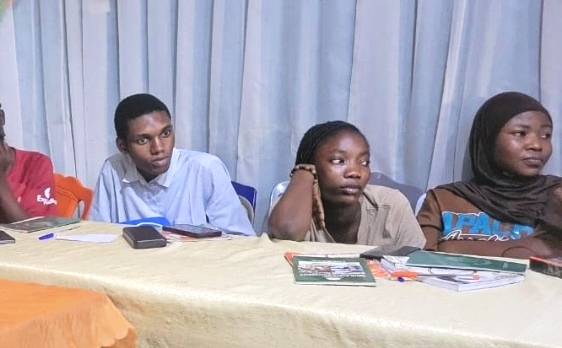
This was disclosed through a community session on Common Public Health Issues at the HFDI Conference Hall to strengthen understanding of healthcare barriers and promote stigma-free communities.
The session, facilitated by Abioye Olanike and Mr. Bamidele was presented by the UNIOSUN IT students and attended by community members and volunteers.
Discussing on the community healthcare barriers, participants examined factors limiting access to healthcare at the grassroots. Key challenges identified include: distance and poor roads that make it difficult to reach health facilities, limited availability of doctors, nurses, and community health workers , poverty and high cost of services and transportation, stigma and discrimination that discourage people from seeking care, low awareness and weak communication about available services, and shortages of essential medicines and medical supplies.
Public health was explained as the area dedicated to improving the health of individuals and communities, with access to healthcare described as essential for maintaining good health.
A major highlight was a real-life story on HIV-related stigmatization shared by Mr. Bamidele. He recounted how fear and misinformation forced an HIV-positive wife out of her home after her status was disclosed, with even co-wives demanding distance.
The woman later met a man who also disclosed his HIV status, showing her that HIV does not make a person less worthy of love, marriage, respect, or acceptance.
The HFDI Team emphasised that with proper knowledge, care, treatment, and support, people living with HIV can live fulfilling lives. Instead of creating distance, communities should create understanding.
The session ended with recommendations for government, healthcare providers, and community members to work together to improve healthcare facilities, transportation, availability of health workers, communication systems, community awareness, and access to essential medicines.
Participants commended HFDI for the interactive approach, noting they gained clearer knowledge of public health challenges and the need to reduce stigma. They also called for continuity of such sessions.
HFDI said the activity reinforces its commitment to empowering communities with knowledge and addressing stigma through education and storytelling to build healthier and more inclusive communities.
#HFDI #OsunState #PublicHealth #HealthcareAccess #EndStigma #CommunityHealth #Osogbo