
Ondo @ 50: Female Politicians Decry Low Representation, Call For Urgent Reforms
As Ondo State marks its 50th anniversary of creation, notable female political leaders have lamented the low level of women’s representation in the state’s political history over the past five decades, with little improvement even in the democratic era that began in 1999.
Speaking in separate interviews to assess Ondo State at 50, they identified the patriarchal system, lack of political will on the part of party leaders, and financial constraints as key factors contributing to low female representation in Ondo politics.
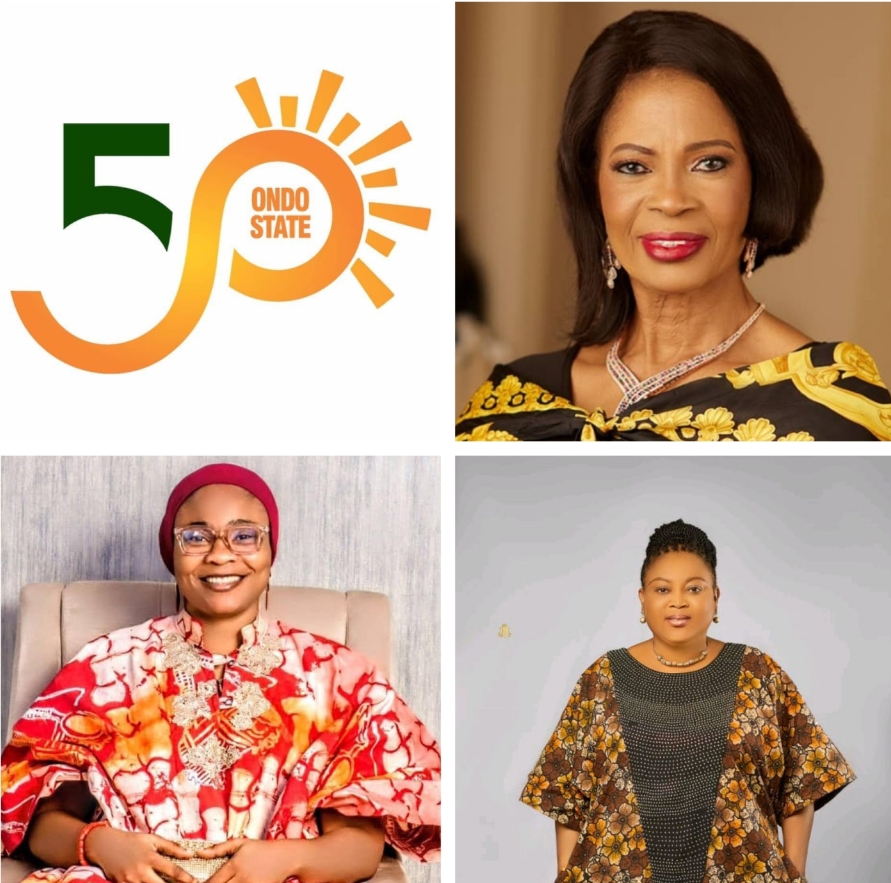
On her part, the first and only female member of the House of Representatives who represented Ileoluji/Okeigbo/Odigbo Federal Constituency between 1999 and 2003, Hon. Engr. Febisola Adeyemi, described the situation of women’s representation as “grossly embarrassing.”
Reflecting on the state’s political history since 1999, the former legislator stressed that improving women’s political participation requires deliberate policies and structural reforms.
She called for conscious efforts by political parties to move women beyond traditional “women leader” roles into mainstream leadership positions, as well as proportional inclusion of women in decision-making processes.
Adeyemi also recommended waiving nomination form fees for female aspirants, reserving specific elective seats for women, and providing capacity-building programmes to deepen women’s understanding of the electoral process and political communication.
She identified major barriers limiting women’s involvement in politics to include cultural and societal norms, financial constraints, lack of support networks, and entrenched patriarchal attitudes that frame politics as a male domain.
She also pointed to security concerns such as harassment, intimidation, and violence during campaigns, as well as social stigmatisation and family pressures, which collectively discourage many women from seeking political office.
Also speaking, a renowned politician in Akure, Mrs. Tomisin Edu-Falade, noted that the 50-year journey so far reflects both commendable progress and notable gaps, as women remain grossly underrepresented in elective offices.
This reality, she said, underscores a broader democratic deficit.
“Governance thrives on inclusion, and when women, who constitute a significant portion of the population, are excluded from decision-making, development loses depth, empathy, and sustainability,” she said.
According to her, the imbalance is not a reflection of a lack of capacity, competence, or commitment among women, but rather the result of structural, cultural, and political barriers that have limited their access to power.
She advocated an inclusive, people-centred, and intentional Ondo State in its next phase of development.
“Gender inclusion in governance is not merely a women’s issue; it is a development imperative. When women are given a seat at the table, communities benefit, policies become more responsive, and progress becomes more sustainable.
“As the state looks to the future, Ondo must consciously harness the strength, ideas, and leadership capacity of its women to build a more prosperous, equitable, and forward-looking society,” she said.
Falade emphasised that improving gender inclusion in governance must move beyond rhetoric to deliberate and enforceable action, noting that women’s participation in governance should be anchored on a clearly defined quota system that is constitutionally backed and legally enforceable.
Such affirmative action is necessary to correct decades of imbalance and to create a level playing field for women to participate meaningfully in leadership.
“Political parties must institutionalise fair nomination processes, reduce financial barriers for female aspirants, and actively support women candidates during elections.
“Government and civil society must also invest in political education, leadership grooming, and mentorship for young women, while enforcing policies that promote inclusive representation at all levels of governance,” she added.
Edu-Falade affirmed that Ondo State has fared well in governance, saying “meaningful developments have, historically, been structured,” and lauded Governor Aiyedatiwa for performing well in consolidating on the precedent of good governance.
The Chairman of Ikale West Local Council Development Authority, Hon. Funke Kumuyi, said having a reasonable number of women in political offices depends largely on the political will of leaders in government.
Kumuyi described female political representation in Ondo State as “very frustrating,” noting that decades of marginalisation have left women struggling for inclusion despite the state’s strong educational standing.
From 1999 till now, we have only had one woman represent Ondo State at the National Assembly. You can see how terrible the situation is.
“With our level of exposure and academic rating, this degenerating situation is worrisome and heartbreaking,” she said.
Congratulating Governor Lucky Aiyedatiwa on the anniversary, Kumuyi expressed optimism about his capacity to change the narrative and appealed to him to demonstrate strong political will in addressing the imbalance.
“With the mindset and personality of our governor, we believe we will get there,” she added.
She also commended President Bola Tinubu for giving women prominent roles at the federal level.
“We urge our governor to take a cue from the President’s posture and ensure that women are brought to the decision-making table so we can jointly drive the development Ondo State needs.”
#justambitioustoserveinfo