

BREAKING BARRIERS: NIGERIAN MEDIA URGED TO LEAD DISABILITY INCLUSION REPORTING
By Titilola Olaniyan,
Journalists in Nigeria have been charged to be more intentional and ethical in reporting disability issues as global attention on disability rights continues to grow.
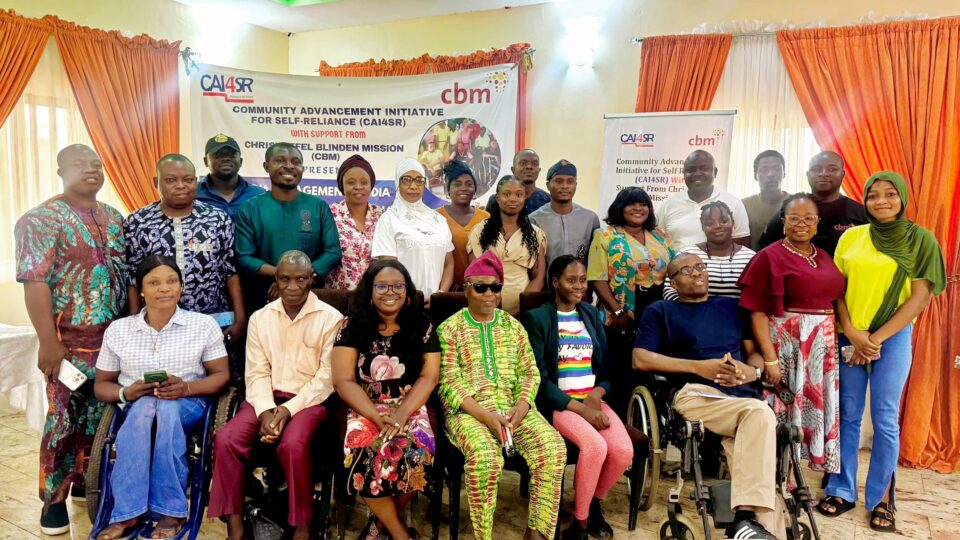
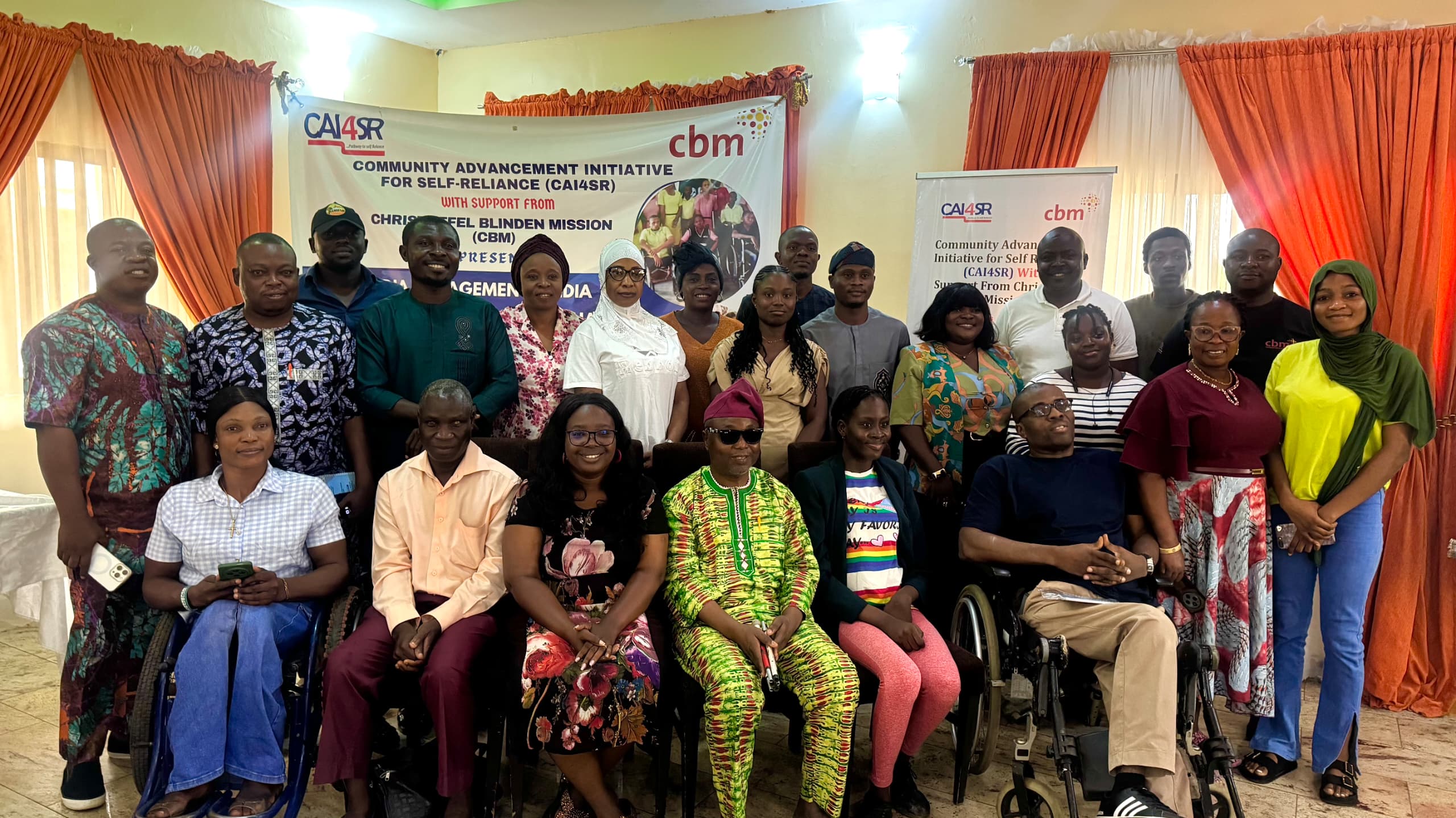
The call was made at a training session on awareness-raising and media advocacy for disability inclusion, recently organized by Community Advancement Initiative for Self-Reliance, CABI, in collaboration with Christian Blind Mission CBM
The training brought together journalists from various media platforms to equip them with the knowledge and skills needed to report disability-related matters responsibly.
With 15% of the global population living with disabilities, experts at the training stressed that journalists play a critical role in shaping public perception and promoting awareness of disability rights.
Resource persons emphasized the importance of using respectful language and avoiding stereotypes. Journalists were advised to focus on the person first, not the impairment, and to respect the names and preferred terminology used by people with disabilities.
“Language used in reporting disability issues is constantly evolving, and journalists need to be aware of the latest trends and best practices. We must avoid language that is condescending or stigmatizing. We should focus on promoting a culture of inclusion and respect,” a facilitator said.
Participants were also trained on laws and policies protecting the rights of persons with disabilities, including the Discrimination Against Persons with Disabilities (Prohibition) Act 2018 and the United Nations Convention on the Rights of Persons with Disabilities, UNCRPD.
State-level protections highlighted included the Osun State Criminal Code, Administration of Criminal Justice System, and the Violence Against Persons Prohibition Law.
The training also addressed barriers journalists face, such as lack of physical access to public buildings, poor understanding of health conditions, and absence of reasonable adjustments that enable journalists with disabilities to do their work.
Experts further stressed the need to involve people with disabilities directly in the reporting process and seek their perspectives on issues that affect them..
Participants pledged to promote disability inclusion through accurate, respectful reporting and to disseminate information that upholds the dignity of persons with disabilities.
The CABI-CBM training is part of ongoing efforts to build media capacity for disability advocacy. Both organizations say the goal is a more inclusive society where people with disabilities are valued, respected, and fully represented in the media.