
FG Directs State Govts Now To Bear Payment Of Electricity Subsidy
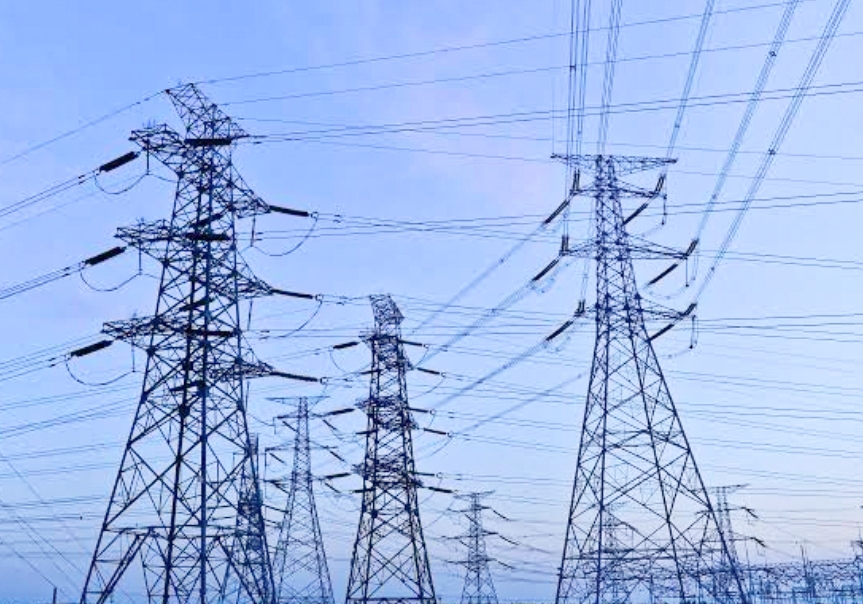
Federal government of Nigeria under the leadership of President Bola Tinubu has directed that state governments are now to bear the cost of electricity subsidy, along with the Federal Government.
Director-General of the Budget Office of the Federation, BoF, Mr. Tanimu Yakubu, who disclosed this at the opening of the 2026 Post-Budget Preparation using Government Integrated Financial Management System, GIFMIS, workshop, in Abuja, yesterday, said state governments that enjoyed the political benefits of electricity subsidy must also share in filling the gap created by subsidy and must not be left to the Federal Government alone.
It was reported that funding for the payment of the subsidy will now come from the Power Assistance Consumers Fund, PCAF.
PCAF is a government-backed financial pool designed to subsidise electricity bills for low-income and vulnerable households, ensuring affordability in the face of rising tariffs. This approach improves energy access while stabilising the electricity sector by funding targeted support, rather than universal subsidies.
More than 18 states are currently operating their regulatory agencies, with others waiting in the wings to do the same.
The states include Lagos, Ondo, Osun, Ekiti, Edo, Delta, Bayelsa, Akwa Ibom, Cross River, Abia, Anambra, Imo, Kogi, Niger, Nasarawa, Plateau, Gombe and Jigawa.
Yakubu said in an address read on his behalf by the Director of Expenditure Social, Mr Yusuf Muhammed: “Mr President has directed that we operationalise a clearer framework to share the cost of electricity across the federation, so the burden is not treated as an open-ended fiscal residual. I mean federal residual. Let me be direct.
“If you want a stable power sector, we must pay for the choices we make. When tariffs are held low cost, a gap is created. That gap is a subsidy, and a subsidy is a bill.
“In 2026, we will stop pretending that this bill can be left to the Federal Government alone, especially where the policy choice or the political benefit is shared across tiers of government. Mr President directed us to invoke the electricity sector legal framework to make burden-sharing practical and transparent.
This means subsidy costs must be explicit, tracked and funded, so they do not return as arrears liquidity crisis or hidden liabilities in the market. It also means that if any tier of government chooses affordability intervention, the responsibility must be clear, agreed and enforceable. This is not punishment. It is an alignment.
“When everyone carries a fair share of the cost, everyone also has an incentive to support cost-effective, efficiency- targeted protection for the vulnerable, and empower markets that can actually deliver for MDAs.
“The implication is simple, makes subsidies-related costs visible in your planning and submission. Do not push liabilities into the market as arrears or unfunded commitments. Support transparent rule-based attribution and financing of affordability decisions.”
The DG also said the President directed the BoF and the MDAs to enhance the dynamism of fiscal rules through a review of the Fiscal Responsibility Framework.
“Fiscal rules are not a slogan, they are the guardrails of government. Without guardrails, spending becomes impulsive, debt becomes casual, and the budget becomes a statement of intent, rather than a tool of delivery.
“But rules must also be smart. They must respond to volatility without collapsing under pressure. That is why the 2026 direction is not to abandon rules, but to modernise them, so they work in today’s Nigeria.
“Mr President’s directive is to review the Fiscal Responsibility Framework to make it more dynamic and more enforceable. That means clearer fiscal anchors, better-defined escape clauses for genuine shocks, and a credible path back to compliance when those clauses are used.
“It means stronger reporting, tighter discipline around contingent liabilities, and a firmer link between the medium-term framework and annual appropriations.
‘’For MDAs, this changes the conversation. You will not only be asked what you want to spend. You will be asked how it fits the fiscal rules, how it affects sustainability, and what measurable results it will deliver,’’ he said.
#OsunDefender